Terraform v1.17.0-alpha20260729 Operational Changes
Explains new Terraform features like deferred actions and test cleanup.
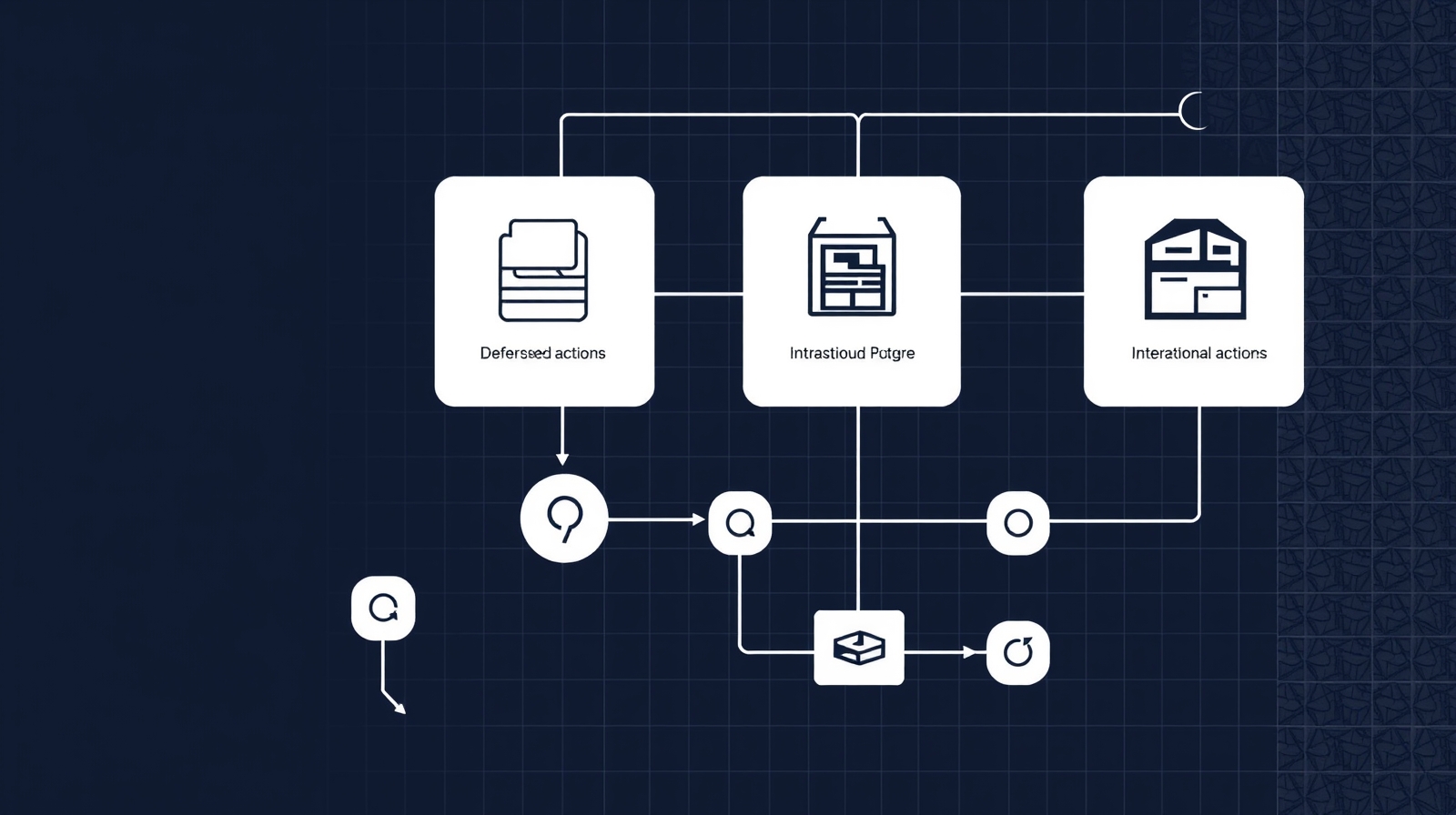
What Changed Operationally
The operational landscape of infrastructure management has shifted significantly with the release of Terraform v1.17.0-alpha20260729. This alpha release introduces a suite of experimental features designed to address long-standing friction points in testing, state management, and policy enforcement. The most consequential addition is the "deferred actions" feature, which fundamentally alters how Terraform handles dynamic values during the planning phase. Previously, the count and for_each arguments in resources, modules, and data blocks were strictly constrained to known values, often forcing operators to pre-calculate all possible instances before applying infrastructure. The new experimental capability allows these arguments to accept unknown values during planning, enabling providers to react more flexibly to these uncertainties. This change matters operationally because it reduces the need for brittle workarounds and allows for more robust handling of dynamic environments where the exact state of dependencies is not immediately determinable. Additionally, the release introduces an automated test cleanup mechanism and enhanced testing capabilities, which streamline the CI/CD feedback loop by managing state files more intelligently.
Deferred Actions and Dynamic Value Handling
The core of the operational improvement in this release lies in the experimental "deferred actions" feature. This mechanism is enabled by passing the -allow-deferral flag to the terraform plan command. By default, Terraform CLI enforces strict validation, requiring that arguments like count and for_each resolve to known values before a plan can be generated. This often creates a bottleneck where operators must manually resolve dependencies or pre-provision certain resources to satisfy these constraints. The deferred actions feature relaxes this requirement, permitting these arguments to hold unknown values during the planning phase. This flexibility allows Terraform to defer the final resolution of these values until later in the execution lifecycle. Consequently, providers are given the opportunity to react to these unknown values in a more nuanced way, potentially implementing fallback logic or waiting for additional data to become available. This capability is critical for complex, multi-stage deployments where the exact scale or composition of infrastructure might depend on external factors that are not immediately known to the Terraform configuration.
How The Capability Fits Together
Enhanced State Management in Testing
Separate from the planning logic is a significant enhancement to the testing framework, specifically the introduction of the terraform test cleanup command. In previous iterations, running Terraform tests often left behind local state files in the .terraform directory, requiring manual cleanup to prevent disk bloat and potential state corruption in subsequent runs. The new test cleanup command addresses this by attempting to automatically clean up these local state files without requiring manual intervention. This automation reduces the operational overhead of running tests, particularly in continuous integration environments where test execution frequency is high. Furthermore, the release allows test authors to exert more granular control over state persistence. Through the skip_cleanup attribute within test files and run blocks, users can now specify that certain test executions should preserve their local state files. This feature is particularly useful for debugging or for test scenarios that rely on the state of a previous run to validate specific behaviors. By combining automatic cleanup with the ability to selectively skip it, the release provides a robust toolset for maintaining a clean and predictable testing environment.
Policy Integration and Logging Improvements
The release also extends capabilities into policy evaluation and observability. The experimental terraform query command has been updated to support the -policies flag, which permits specifying one or more policy set directory paths. This allows users to evaluate policies against resources discovered by list blocks during a query operation, effectively bridging the gap between configuration discovery and compliance checking. In parallel, the terraform init command has been enhanced to enrich log messages with provider versions. This improvement aids in operational debugging by providing clearer visibility into which provider versions are being utilized during the initialization process, which is essential for troubleshooting version-specific compatibility issues. While these features are currently experimental and available only in alpha releases, they represent a move toward more integrated and observable infrastructure workflows.
Operational Impact
Impact on Infrastructure Engineers and Administrators
The convergence of Terraform v1.17.0-alpha20260729 and Kubernetes v1.37 introduces a significant shift in how infrastructure is managed and governed, particularly regarding state handling and security boundaries. For administrators, the most immediate operational impact stems from the experimental "deferred actions" feature in Terraform. Previously, the count and for_each arguments in modules, resources, and data blocks were strictly constrained to known values, often necessitating complex workarounds or separate plans when dealing with dynamic environments. By allowing these arguments to accept unknown values and enabling providers to react more flexibly, this feature reduces the friction of provisioning resources that depend on external, unknown state. Engineers must evaluate whether their current provider implementations support this flexibility, as the feature is currently locked to alpha releases and requires the -allow-defer flag during planning.
Simultaneously, the Kubernetes v1.37 sneak peek signals a tightening of security and operational constraints that administrators must address in their clusters. The deprecation of static pods referencing Secrets or ConfigMaps represents a critical pivot toward a more secure, immutable pod lifecycle. Administrators must audit existing deployments to identify and migrate static pod configurations that rely on sensitive data stored in these resources. This change forces a re-evaluation of how configuration is injected into control plane components, likely requiring the adoption of external secrets management solutions or the transition to standard pod specifications that adhere to the new constraints.
Prerequisites, Access, and Licensing Constraints
Rollout And Governance Decisions
Navigating the transition to these versions requires a clear understanding of the access controls and licensing implications inherent in the alpha nature of the new Terraform features. Because the "deferred actions" feature and the enhanced test cleanup capabilities are currently experimental, they are exclusive to alpha releases of the Terraform CLI. Organizations must ensure that their development and testing environments are configured to use the specific alpha build (v1.17.0-alpha20260729) rather than the stable branch. This often requires manual intervention to pin the CLI version or configure the toolchain to accept pre-release binaries, a deviation from standard operational procedures that introduces potential version drift risks.
Furthermore, the Kubernetes v1.37 release introduces a hardening of system requirements that impacts access and compliance. The official phasing out of cgroup v1 support, with the failCgroupV1 setting defaulting to true, means that administrators must verify the underlying Linux kernel and container runtime configurations. Access to clusters running older kernels may be restricted or require immediate intervention to upgrade the host OS. While the Kubernetes project indicates that migration to cgroup v2 is recommended, the defaulting of failCgroupV1 to true implies that clusters failing this check may be treated as non-compliant or degraded, necessitating a rigorous audit of the host infrastructure before approving the upgrade path.
Governance and Pilot Evaluation Strategy
Implementing these changes demands a structured governance approach that separates pilot testing from production rollout. Given that Terraform's experimental features are not yet available in stable releases, a pilot program should focus on the terraform test enhancements, specifically the new backend blocks and skip_cleanup attributes. Test authors can leverage the ability to specify backend blocks within run blocks to load state from a persistent backend, rather than starting from an empty state on every execution. This allows for the creation of integration tests that accurately reflect production state. However, the skip_cleanup attribute must be used judiciously; while it prevents the automatic removal of state files, it requires manual governance to ensure that local state files in the .terraform directory do not accumulate and consume disk space or introduce state corruption risks.
For the Kubernetes side, governance must prioritize the deprecation of kubectl run --filename/-f and the ipvs mode for kube-proxy. A pilot evaluation should involve a controlled migration of kubectl run commands to kubectl apply or kubectl create to ensure compatibility with the v1.37 roadmap. Regarding kube-proxy, the phased deprecation—expected to be disabled by default in v1.40 and removed entirely by v1.43—requires a timeline-aligned migration plan. Administrators should disable ipvs mode in the pilot environment to identify any networking dependencies or performance regressions before the feature is fully sunset. This staged approach allows teams to validate the impact on service discovery and load balancing without risking the stability of the production cluster.
Failure Modes And Limits
Operational Risks and Feature Limitations
The rapid evolution of infrastructure tooling introduces inherent operational risks, particularly when relying on alpha-quality releases. Terraform v1.17.0-alpha20260729 is explicitly an alpha release, meaning the experimental features included are not yet available in stable CLI versions. This distinction is critical for production environments, as the "deferred actions" feature—which allows count and for_each arguments to hold unknown values and enables providers to react flexibly to those unknowns—remains unproven. While this flexibility theoretically allows providers to handle dynamic configurations more gracefully, it introduces a layer of unpredictability. If a provider does not correctly implement the logic for handling deferred actions, the infrastructure provisioning process may stall or fail in unexpected ways, requiring manual intervention to resolve state inconsistencies.
Security And Privacy Considerations
Similarly, the Kubernetes ecosystem is undergoing significant structural changes that necessitate careful planning. The upcoming v1.37 release introduces the deprecation of kubectl run --filename/-f, a command that has been a staple for creating workloads. Organizations relying on scripts or automation tools that invoke this command will need to migrate to alternative methods before the feature is removed. Furthermore, the deprecation of kube-proxy's IPVS mode marks a major shift in networking architecture. Support for this mode is slated for removal entirely by version 1.43, with a defaulting to disabled by 1.40. This transition requires a thorough review of service mesh and load balancing configurations, as the underlying networking behavior of the cluster will fundamentally change.
Verification and Environment Checklist
Open Questions
Before deploying these alpha features or upgrading to the new Kubernetes version, a comprehensive verification checklist is required to ensure stability and compatibility.
- Terraform Alpha Compatibility: Confirm that Terraform v1.17.0-alpha20260729 is compatible with the specific providers currently in use. Verify that the providers support the new experimental "deferred actions" logic, as unimplemented provider support will cause plan failures.
- Kubernetes Migration Planning: Audit all automation scripts and CI/CD pipelines to identify and replace any usage of
kubectl run --filename/-fwith the recommended alternatives. - Networking Configuration: Review kube-proxy settings to determine the current mode. Plan the migration to IPVS alternatives or ensure the cluster is prepared for the default change to disabled IPVS mode in v1.40.
- SELinux and Security Context: Verify that SELinuxMount is enabled by default in v1.37 and audit existing workloads to ensure they do not rely on static pods referencing Secrets or ConfigMaps, as these references are no longer permitted.
Environment Checklist
Verification Statement
This article was not lab-tested. The information presented regarding Terraform v1.17.0-alpha20260729 and Kubernetes v1.37 is based solely on the provided release notes and research summaries. Readers must verify all claims, particularly regarding experimental features and deprecation timelines, against the official documentation and their specific infrastructure requirements before proceeding to production use.
// source record
Sources
- https://github.com/hashicorp/terraform/releases/tag/v1.17.0-alpha20260729 github.com · checked 01 Aug 2026
- https://kubernetes.io/blog/2026/07/31/kubernetes-v1-37-sneak-peek/ kubernetes.io · checked 01 Aug 2026