Kubernetes Gateway API v1.6.0 Operational Changes
Kubernetes Gateway API v1.6.0 introduces standard TCP/UDP routing and experimental API separation.
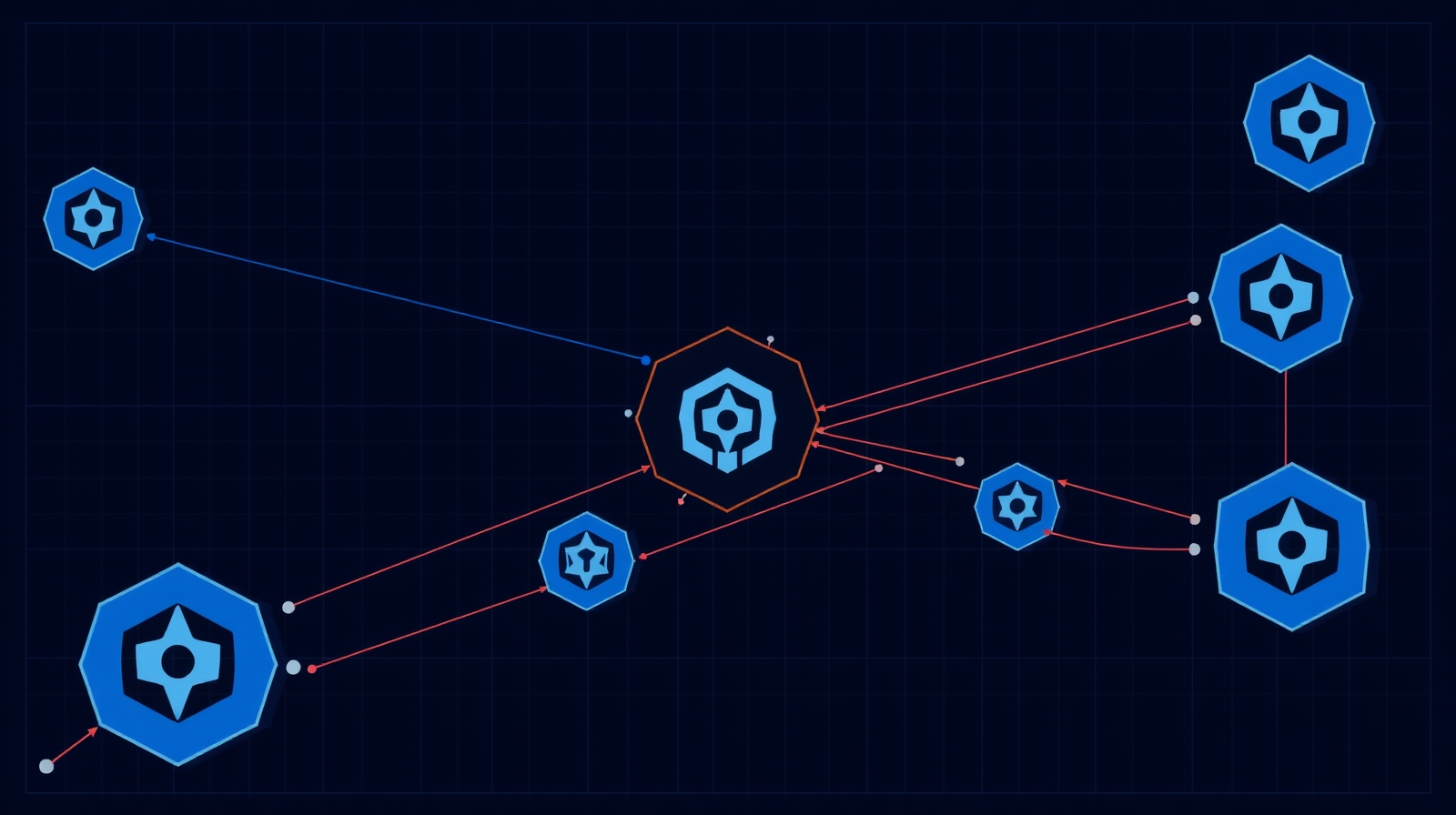
What Changed Operationally
The Kubernetes ecosystem has reached a significant operational milestone with the release of Gateway API v1.6.0, which establishes a new standard for role-oriented and expressive service networking. This update moves the API from a foundation focused primarily on Layer 7 traffic to a comprehensive universal ingress and mesh networking API capable of handling both Layer 4 and Layer 7 protocols. The operational impact of this release is immediate: administrators can now implement stable, production-grade routing for raw TCP and UDP traffic using the newly graduated TCPRoute and UDPRoute resources. This shift allows teams to standardize their ingress and egress control planes across all protocol types, reducing the need for custom controllers or fragmented tooling. Furthermore, the introduction of a distinct API group for experimental resources clarifies the stability boundaries of the platform, allowing operators to adopt experimental features without risking the stability of their standard networking stack.
Layer 4 Protocol Standardization
A primary operational change in Gateway API v1.6.0 is the graduation of TCPRoute and UDPRoute to standard status within the v1 API version. Previously, these resources existed in an experimental state, limiting their suitability for critical infrastructure. With this release, they have reached General Availability (GA), offering the stability and portability required for complex networking topologies. The mechanism for this routing follows a consistent attachment model: a Gateway resource must define a listener configured to accept the specific protocol, and the TCPRoute or UDPRoute attaches to that listener to define the forwarding rules. For example, traffic arriving on a Gateway listener configured for TCP on port 12345 is proxied to the endpoints of a target service, such as my-foo-service, on port 6000. UDP routing follows an identical pattern, swapping the listener protocol and the route kind to handle datagram traffic. This standardization ensures that implementations across the ecosystem behave consistently, simplifying the management of diverse workloads that rely on non-HTTP protocols.
How The Capability Fits Together
Architectural Separation of Experimental Features
Beyond protocol support, v1.6.0 introduces a critical architectural refinement regarding the lifecycle of experimental resources. In previous versions, experimental resources shared the standard API group (gateway.networking.k8s.io), relying solely on version strings like v1alpha2 to distinguish them from stable features. This created ambiguity, as operators could inadvertently rely on features that might change or be removed. The new release addresses this by moving all experimental resources to a separate API group: gateway.networking.x-k8s.io. Additionally, experimental API types now carry an "X" prefix in their names, such as XBackend and XMesh. This convention makes the experimental/standard boundary explicit at the API group level. When an experimental resource matures, it will graduate to the standard group and drop the X prefix. This separation allows teams to adopt cutting-edge features—such as the new XBackend resource, a general-purpose decorator for Services—while maintaining a clear, immutable boundary for their production networking configuration.
Backend Management and Capabilities
The release also introduces the XBackend resource, an experimental feature designed to provide a general-purpose decorator for Service objects and other backend types within the Gateway API ecosystem. This resource allows for enhanced backend management, offering more flexibility than standard Service references. However, it is explicitly marked as experimental; its behavior is subject to change, and it should not be assumed ready for production environments. The architectural shift toward separating experimental resources into the gateway.networking.x-k8s.io group ensures that the use of XBackend does not interfere with the stability of the standard v1 API. This capability model provides a pathway for future enhancements to backend abstraction, allowing for more complex routing logic and backend selection strategies without polluting the stable API surface.
Operational Impact
Operational Implications for Network Engineers
The graduation of TCPRoute and UDPRoute to standard status in Gateway API v1.6.0 fundamentally alters the operational landscape for network engineers managing Kubernetes ingress and service mesh configurations. Previously, layer 4 protocol routing relied on experimental or deprecated alpha versions, which required teams to maintain parallel infrastructure or face future migration costs. With these resources now stable in the v1 API, administrators can confidently implement raw TCP and UDP proxying without the risk of breaking changes. This shift allows for a more unified management strategy where HTTP and non-HTTP traffic are governed by the same API versioning standards, reducing the cognitive load on DevOps teams and simplifying the governance of cross-cluster networking policies.
Implementing these changes requires a specific configuration pattern that differs from standard HTTP routing. A Gateway must first define a listener configured for TCP or UDP protocols rather than HTTP. Once the listener is established, a TCPRoute or UDPRoute object attaches to that listener to define the traffic forwarding rules. For example, to route raw TCP traffic arriving on port 12345 of a Gateway to the endpoints of a specific service on port 6000, an administrator must create a TCPRoute resource that explicitly binds to the target service. This structure ensures that layer 4 traffic is isolated from layer 7 routing logic, allowing for granular control over backend connectivity and port mapping.
Prerequisites and Implementation Constraints
Rollout And Governance Decisions
Adopting Gateway API v1.6.0 introduces a new constraint regarding API group boundaries that administrators must address during the deployment phase. The release separates standard resources from experimental ones by moving the latter into a distinct API group, gateway.networking.x-k8s.io, and prefixing their names with an "X." This change means that existing controllers or tools relying on the previous shared API group structure will require updates to their manifests or configuration files. While the separation improves clarity, it necessitates a thorough audit of custom controllers and automation scripts to ensure they are targeting the correct API group for the resources they manage.
A critical caveat for administrators is the experimental nature of the new XBackend resource. Introduced as a general-purpose decorator for Services, XBackend is currently defined in the experimental API group and is explicitly marked as unstable. Because its behavior is subject to change, it should not be used in production environments. Instead, teams should continue to rely on standard Kubernetes Service objects for backend definitions. The introduction of XBackend is primarily a signal of future architectural directions for backend management within the Gateway API ecosystem, and production workloads should wait for its graduation to standard status before integration.
Evaluation and Conformance Strategy
To ensure a successful rollout of Gateway API v1.6.0, organizations must prioritize conformance testing to verify that their chosen controller implementation behaves consistently with the specification. The Kubernetes community maintains an extensive test suite to guarantee portable behavior across different vendors. Administrators should verify that their selected Gateway controller is listed as conformant on the official documentation or release notes. This verification step is essential for avoiding "vendor lock-in" and ensuring that network policies defined in one cluster can be replicated in another without unexpected behavioral deviations.
When selecting a controller, the list of conformant implementations provides a concrete decision framework. As of the release, implementations such as Agentgateway, Airlock Microgateway, GKE Gateway, kgateway, NGINX Gateway Fabric, and Traefik Proxy have demonstrated compliance with the v1.6.0 standard. Engineers should evaluate these options based on their existing infrastructure stack and operational requirements. Utilizing a conformant controller ensures that the new TCP and UDP routing capabilities, along with the cleaner API boundaries, function as intended, mitigating the risks associated with adopting new Kubernetes networking standards.
Failure Modes And Limits
Failure Modes and Limitations
The introduction of the XBackend resource, while offering a flexible mechanism for decorating backends within the Gateway API ecosystem, carries inherent risks for production environments. As an experimental feature, its behavior is not guaranteed to remain stable. The documentation explicitly cautions against assuming readiness for production use, as the API is subject to change. This volatility means that infrastructure relying on XBackend may require significant refactoring in future releases, potentially introducing downtime or breaking changes during upgrade cycles. Furthermore, the separation of experimental resources into a distinct API group (gateway.networking.x-k8s.io) with an "X" prefix is a structural change designed to clarify boundaries. However, this necessitates a shift in tooling and mental models for operators who must now distinguish between standard resources and experimental ones, adding complexity to the management of Kubernetes networking configurations.
Security And Privacy Considerations
The graduation of TCPRoute and UDPRoute to standard status resolves a significant gap in the API's capability, yet it introduces specific operational failure modes related to configuration and compatibility. A common configuration error involves the misalignment between a Gateway listener and the attached Route. Specifically, a TCPRoute cannot be attached to a listener unless the listener explicitly allows TCP protocol attachment. If a listener is configured for HTTP or UDP, the TCPRoute will fail to bind, resulting in traffic being dropped or routed to an unintended destination. Similarly, while the v1alpha2 versions of TCPRoute and UDPRoute are deprecated in v1.6.0, they may still exist in legacy clusters. Operators must verify that all Route resources are updated to the v1 version before the alpha versions are removed in a future release to prevent service disruption.
Verification and Environmental Checklist
Open Questions
Before deploying Gateway API v1.6.0 or the new EC2 R8i instances in a production setting, the following checklist must be completed to ensure compatibility and stability.
- Gateway API Conformance: Verify that the specific Gateway controller implementation being used (e.g., NGINX Gateway Fabric, Traefik Proxy, GKE Gateway) is listed as conformant for v1.6.0 on the official Kubernetes blog. Do not assume support based solely on the general availability of the API.
- Resource Versioning: Audit the cluster for any remaining v1alpha2 versions of TCPRoute and UDPRoute. These resources are deprecated and will be removed in a future release; their presence can lead to conflicts or unexpected behavior during upgrades.
- Experimental Resource Exclusion: Ensure that no production traffic is routed through experimental resources such as XBackend. These resources are defined in the
gateway.networking.x-k8s.iogroup and must be treated as non-production-grade. - Listener Protocol Alignment: For Layer 4 traffic, confirm that Gateway listeners are explicitly configured to accept the specific protocol (TCP or UDP) required by the attached Route. A mismatch between the listener's allowed protocols and the Route's type will result in routing failures.
- Instance Capability Verification: For AWS EC2 R8i and R8i-Flex instances, validate that the specific workload profile (e.g., SAP certification, PostgreSQL optimization) aligns with the operational requirements of the application. While performance claims are significant, actual throughput and latency must be benchmarked against the specific hardware configuration to ensure the 20% to 60% performance improvements are realized.
Environment Checklist
Disclaimer and Verification Statement
This article is a synthesis of the provided research notes and does not represent first-hand testing or lab validation. The performance figures and feature capabilities described for Gateway API v1.6.0 and Amazon EC2 R8i instances are derived from vendor documentation and release notes. Readers must independently verify these claims against their specific infrastructure, workload characteristics, and security requirements before deploying these technologies in a production environment.
Verification Before Production Use
This article was not lab-tested. Verify the current vendor documentation, licensing and rollout conditions, and the behavior in a non-production environment before relying on it operationally.
// source record
Sources
- https://kubernetes.io/blog/2026/08/03/gateway-api-v1-6-release/ kubernetes.io · checked 10 Aug 2026
- https://aws.amazon.com/about-aws/whats-new/2026/08/amazon-ec2-r8i-r8i-flex/ aws.amazon.com · checked 10 Aug 2026