AI Agents in Observability Workflows
Explores how AI agents transform observability by automating data synthesis and workflow orchestration.
What Changed Operationally
The operational landscape of software development has fundamentally shifted with the introduction of AI agents capable of autonomous workflow execution. Previously, engineers relied on manual configuration and iterative scripting to translate raw telemetry into actionable insights. Today, the integration of advanced AI tooling allows teams to bypass the majority of this manual labor, achieving near-complete task resolution in a fraction of the standard time. This transition represents a move from reactive monitoring to proactive, automated intelligence, where the platform handles the heavy lifting of data synthesis and system analysis.
This acceleration is most visible in the migration of complex observability dashboards. By leveraging new AI-driven capabilities, organizations can now complete the migration of dashboards in approximately 30 minutes, achieving a completion rate of 95%. This drastic reduction in time-to-insight allows engineering teams to focus on higher-level architectural decisions rather than the minutiae of data formatting and query construction. The operational impact is immediate: teams can rapidly spin up monitoring for new services, troubleshoot legacy systems, and standardize dashboards across distributed environments without the bottleneck of manual configuration.
Automated Data Synthesis and Query Translation
The underlying mechanism that enables this speed is the ability of AI agents to synthesize disparate data sources and translate natural language into complex query logic. Rather than requiring users to memorize specific query syntax or understand the exact schema of underlying databases, the system accepts high-level descriptions of the desired information. The AI agent then constructs the necessary queries to retrieve the relevant metrics, logs, or traces, effectively acting as an intermediary between human intent and machine-readable data. This capability bridges the gap between non-technical stakeholders and the technical observability stack, democratizing access to system performance data.
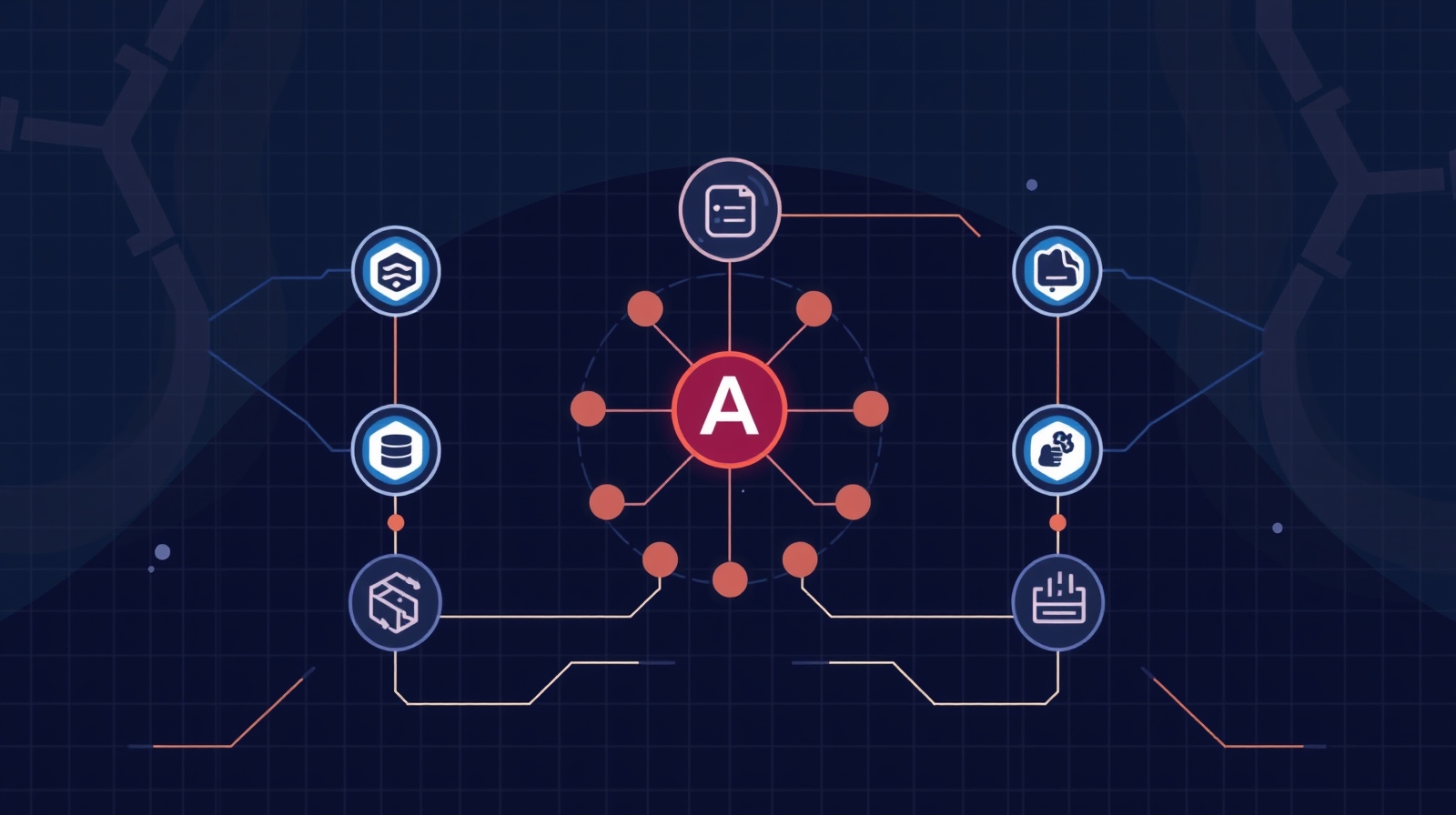
How The Capability Fits Together
Crucially, this process operates within the constraints of the existing data infrastructure. The AI does not generate new data; instead, it acts as a sophisticated filter and processor for the telemetry already ingested by the platform. It understands the structure of the data available and uses that context to generate accurate visualizations. This ensures that the insights provided are grounded in reality and do not hallucinate metrics that do not exist. The system is designed to maximize the utility of the current data lake, transforming static records into dynamic, real-time visualizations through intelligent parsing and aggregation.
Context-Aware Workflow Orchestration
Beyond simple data retrieval, the architecture supports context-aware workflow orchestration. The AI agent does not operate in a vacuum; it maintains a persistent context of the user's project, the specific data sources involved, and the operational goals at hand. This allows for a continuous loop of assistance where the agent can suggest next steps, identify anomalies based on historical patterns, and automate routine maintenance tasks. The integration of these agents into the broader observability platform means they can trigger alerts, initiate investigations, and even suggest remediation steps based on the analysis of the data flow.
It is important to clarify the boundaries of this product's functionality. While the AI excels at interpreting data and automating workflows, it does not replace the need for human oversight or the underlying infrastructure that collects the data. The system is designed to augment human capabilities, handling the repetitive and complex aspects of data interpretation, while leaving the final decision-making and strategic direction to the engineering team. The focus is on reducing the operational burden of data management, ensuring that the platform serves as a force multiplier for the engineering staff rather than a standalone autonomous entity.
Operational Impact
Impact on Observability Workflows
The integration of AI agents into observability platforms fundamentally alters the daily workflow for both administrators and engineers. By leveraging tools like the Model Context Protocol (MCP) and Claude, organizations can achieve a level of automation that previously required manual intervention. The most immediate impact is the drastic reduction in time required for routine tasks, such as dashboard migration. Research indicates that AI agents can complete up to 95% of a dashboard migration in approximately 30 minutes. This capability allows engineers to shift their focus from repetitive data configuration to higher-value activities, such as root cause analysis and architectural optimization. The ability to handle multiple projects simultaneously further amplifies this efficiency, allowing teams to scale their operations without a corresponding increase in headcount.
For administrators, the introduction of AI-driven features like Assistant Investigations and Automations represents a shift from static monitoring to proactive governance. These tools enable the automated detection of anomalies and the generation of insights, reducing the manual burden of sifting through logs and metrics. The vision for these tools is to reduce operational burdens by handling the "noise" of data, thereby allowing administrators to focus on strategic decision-making and system health. This transition supports a more resilient infrastructure where potential issues are identified and addressed before they impact end-users.
Prerequisites and Access Constraints
Rollout And Governance Decisions
Implementing these AI-driven observability solutions requires specific technical and organizational prerequisites. The core of the integration relies on the Model Context Protocol (MCP), which acts as a bridge between the observability platform and AI agents. Successful deployment depends on the availability of a robust data pipeline that can feed the necessary context to the AI models. Without comprehensive data ingestion, the AI agents cannot perform their tasks effectively, rendering the advanced features like dashboard migration or automated investigations useless. Administrators must ensure that their data sources are properly connected and that the necessary metadata is available for the AI to analyze.
Access to these advanced features is typically gated behind specific licensing tiers or organizational roles. While the tools are designed to be accessible, the full suite of capabilities, including advanced automations and deep integration with third-party AI models, may require enterprise-level subscriptions. This creates a constraint for smaller teams or individual developers who may not have the budget for these premium tiers. Furthermore, access to the AI agents often requires a level of trust and configuration within the organization's security policies. Administrators must define who can invoke these agents and what data they are allowed to access, ensuring that the use of AI does not inadvertently expose sensitive information.
Evaluation and Governance Strategy
Adopting AI agents in observability requires a realistic evaluation strategy that prioritizes problem-solving over novelty. The primary goal should be to address specific operational pain points rather than adopting AI for the sake of technological advancement. A pilot program is essential to validate the effectiveness of these tools in a controlled environment. This involves testing the AI's ability to migrate dashboards or investigate anomalies against known metrics to ensure accuracy and reliability. The research notes emphasize that Grafana is committed to ensuring AI tools solve real problems, a principle that should guide the evaluation process.
Governance plays a critical role in the rollout of AI agents. As these tools interact with sensitive operational data, organizations must establish clear guidelines for their use. This includes monitoring the outputs of the AI agents to prevent the propagation of errors and ensuring that the AI's recommendations align with established operational procedures. The future vision involves making AI more accessible and integrated into workflows, but this accessibility must be balanced with rigorous oversight. By focusing on data-driven decision-making and establishing a framework for continuous improvement, organizations can harness the power of AI agents to create more efficient and intelligent workflows.
Failure Modes And Limits
Operational Risks and Limitations
While the integration of AI agents into observability workflows promises to significantly reduce manual effort, the technology introduces specific failure modes that can complicate operations if not carefully managed. One primary limitation is the potential for "agent hallucination," where an AI agent might confidently present incorrect data or suggest configuration changes that appear valid but are factually wrong. This risk is particularly acute in complex environments where the context of the data is nuanced. Without rigorous validation steps, an engineer might inadvertently deploy a configuration based on an AI-generated recommendation that introduces instability or security vulnerabilities. The reliance on the Model Context Protocol (MCP) and large language models (LLMs) means that the output is probabilistic rather than deterministic, creating a gap between the speed of generation and the accuracy of the result.
Security And Privacy Considerations
Furthermore, the capability to complete tasks—such as dashboard migration—rapidly can mask underlying structural issues within the existing infrastructure. If an AI agent is used to migrate dashboards or automate investigations, it may succeed in moving the visual elements but fail to capture the correct data sources, alerting rules, or time ranges. This creates a false sense of security where the system appears operational, yet the actual visibility into system health is compromised. The research notes highlight that while the AI can complete 95% of a dashboard migration in 30 minutes, the remaining 5% often requires deep human intervention to ensure the data integrity and logic of the observability stack are preserved. Relying solely on automation for critical operations tasks risks eroding the team's ability to debug complex issues, as the engineers may become detached from the specific data pipelines and alerting logic that the AI is manipulating.
Verification and Production Readiness
Before deploying AI-driven observability tools in a production environment, it is imperative to conduct a thorough verification process to ensure reliability and security. Organizations must establish strict validation protocols for any automated actions taken by AI agents, particularly regarding configuration changes and alerting rules. This includes implementing a "human-in-the-loop" approach for critical infrastructure modifications, where AI suggestions are reviewed and approved by qualified personnel before execution. Additionally, teams should audit the data sources and context provided to the AI agents to ensure they are not inadvertently exposing sensitive information or accessing unauthorized resources. The integration of tools like Claude and the MCP requires a clear understanding of the data flow and the boundaries of the AI's decision-making authority.
Open Questions
It is critical to acknowledge that the claims regarding the performance of these tools, such as the 95% dashboard migration rate, are derived from specific internal testing scenarios and do not represent a universal standard for all environments. The research indicates that these capabilities are still evolving, and their effectiveness can vary significantly based on the complexity of the data sources and the specific observability platform being used. Therefore, readers must verify the compatibility of the AI tools with their existing stack and conduct their own performance benchmarks before relying on them for mission-critical operations. The vision of AI reducing operational burdens is contingent upon the successful mitigation of these risks and the establishment of robust verification mechanisms.
Environment Checklist
Environment Checklist
- Validate Data Sources: Ensure that all data sources connected to the AI agent have the necessary permissions and that no sensitive information is exposed in the context provided to the model.
- Test in Non-Production: Run AI-driven automations and dashboard migrations in a staging or development environment to identify potential hallucinations or configuration errors before applying them to live systems.
- Review Alert Logic: Manually verify that any automated alerting rules generated by the AI are logically sound and do not generate false positives or miss critical anomalies.
- Establish Approval Workflows: Implement a process where AI-generated recommendations require human sign-off for any changes that could impact system availability or security.
- Monitor Agent Activity: Set up logging and monitoring for AI agent activities to track their actions and detect any unexpected behavior or drift from intended functionality.
Verification Statement
This article was not lab-tested. The claims and limitations presented are synthesized from research notes and do not reflect independent verification of the specific tools mentioned. Readers must verify the capabilities, security posture, and performance of AI observability tools within their own specific infrastructure and use cases before deploying them for production use.
// source record
Sources
- https://grafana.com/blog/ai-week-recap/ grafana.com · checked 09 Aug 2026